Admission Helpline
7371037371
Admission Helpline7371037371
Master of Business Administration. A two-year postgraduate programme aligned with AICTE, UGC and the National Education Policy (NEP) 2020.
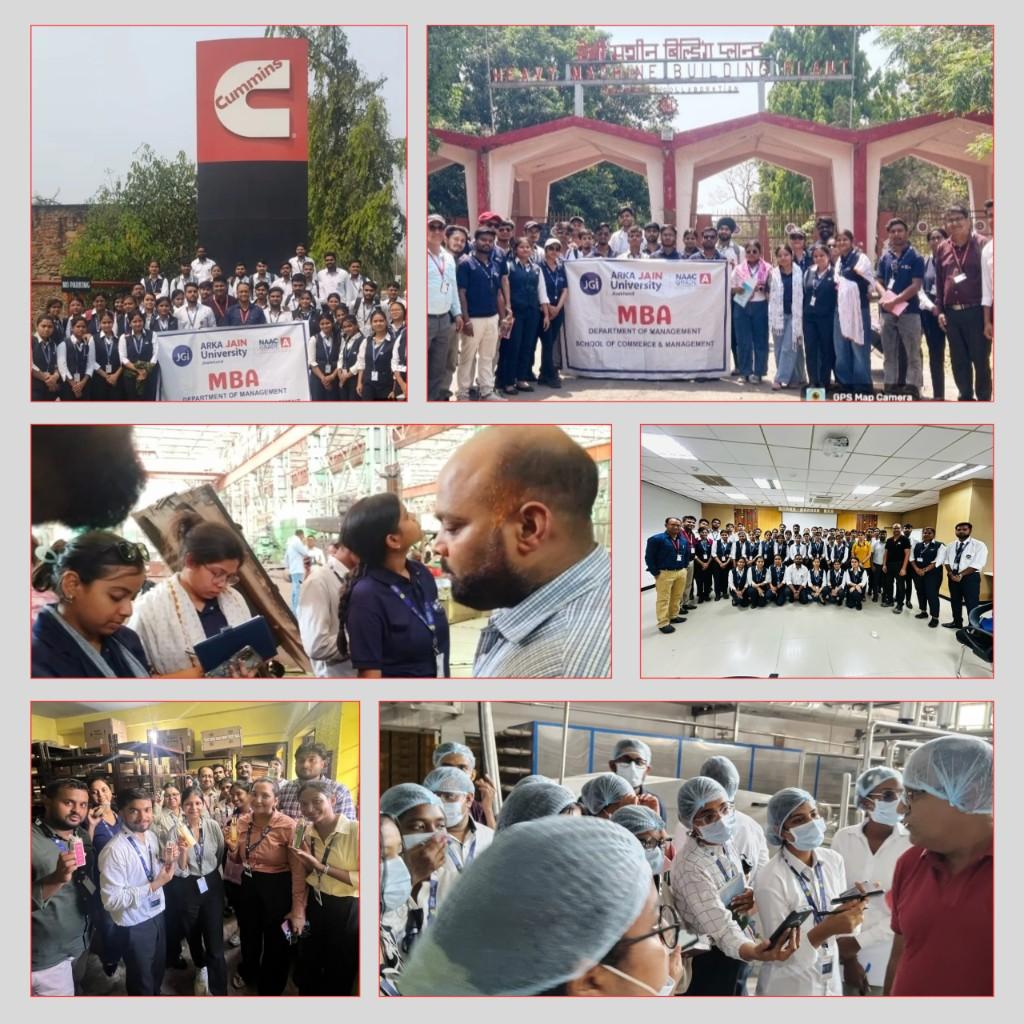
The Department of Management – MBA at ARKA JAIN University, is committed to developing competent, ethical, innovative, and future-ready management professionals capable of navigating the complexities of the contemporary business environment. The Department strives to create an enriching academic ecosystem that integrates management knowledge, practical exposure, industry engagement, and professional development to prepare students for leadership roles across diverse business sectors.
With a strong emphasis on holistic and industry-relevant education, the Department adopts a learner-centric approach that goes beyond conventional classroom teaching. The teaching-learning process incorporates case-based discussions, live projects, industrial visits, corporate interactions, internships, research assignments, and value-added courses, enabling students to connect theoretical concepts with real-world business practices. The academic environment encourages analytical and critical thinking, effective communication, entrepreneurial orientation, digital proficiency, teamwork, and ethical decision-making.
The Department offers opportunities for specialisation in Marketing, Finance, and Human Resource Management, allowing students to develop functional expertise while gaining a comprehensive understanding of business and organisational management. Its curriculum emphasises experiential learning, multidisciplinary knowledge, research orientation, and the practical application of managerial concepts to contemporary business challenges. Through collaborations and engagement with industry organisations, the Department endeavours to bridge the gap between academic learning and professional expectations.
Recognising that education extends beyond academics, the Department places considerable importance on student mentoring, personality development, leadership skills, and co-curricular engagement. Initiatives such as Aarambh – the Orientation-cum-Induction Programme, MBA Synergies, and Pragati provide opportunities for academic integration, collaborative learning, and continuous student development. Additional professional development initiatives and industry-oriented learning opportunities further strengthen students’ employability and career readiness.
The Department is supported by a team of qualified and experienced faculty members who contribute to academic excellence through teaching, mentoring, research, and scholarly activities. It actively promotes a research-oriented culture through academic publications, conferences, books, and knowledge-sharing initiatives, encouraging both faculty and students to engage with emerging management perspectives and contemporary organisational issues.
At its core, the Department of Management – MBA aspires to nurture responsible business leaders, innovative entrepreneurs, critical thinkers, and lifelong learners. Through its commitment to academic excellence, industry relevance, ethical values, research, and sustainable development, the Department seeks to empower students with the knowledge, competencies, and confidence to create meaningful contributions to organisations and society at the local, national, and global levels.
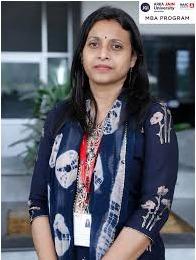
Welcome to the Department of Management – MBA at ARKA JAIN University!
It is my pleasure to welcome you to a vibrant academic community committed to excellence in management education and the holistic development of future business leaders. We believe that management education is not merely about acquiring knowledge but also about developing the ability to think critically, make informed decisions, lead responsibly, and adapt to an ever-evolving business environment.
At the Department, we strive to create a dynamic and engaging learning environment that brings together academic excellence, practical exposure, industry interaction, and professional development. Our teaching-learning approach goes beyond traditional classroom instruction through case studies, live projects, industrial visits, corporate interactions, internships, research activities, and skill-development initiatives. These experiences enable our students to bridge the gap between theory and practice and develop the competencies required to excel in the corporate world.
With specialisation opportunities in Marketing, Finance, and Human Resource Management, we encourage students to explore their interests, strengthen their functional expertise, and develop a broader managerial perspective. Our dedicated faculty members play a pivotal role in this journey by providing academic guidance, mentoring, and continuous encouragement.
We firmly believe that the foundation of a successful management professional lies in a combination of knowledge, integrity, innovation, leadership, and social responsibility. Therefore, we place equal emphasis on intellectual growth, ethical values, communication, teamwork, entrepreneurial thinking, and lifelong learning.
As we prepare our students for the opportunities and challenges of tomorrow, our commitment remains to nurture confident, competent, and responsible professionals who can make a meaningful difference in their organisations and society.
I invite prospective students, parents, alumni, industry partners, and other stakeholders to connect with us and become a part of this enriching journey.
To emerge as a centre of excellence in management education that develops competent, ethical, and innovative business leaders equipped with a global mindset, digital dexterity, and a commitment to sustainable socio-economic development.
Learning at Department of Management -MBA begins with enabling students to explore self and the program through Aarambh - The orientation cum Induction program. Teachings extends beyond classroom instructions and find place in case discussions, projects, industry interactions, industrial visits and value-added courses. These experiences enable students to examine and understand business challenges, connect concepts with practice and develop informed perspectives on local business, entrepreneurial initiatives and managerial decisions.
The Department supports student development through an extensive Mentor- Mentee program, academic guidance and opportunities to organise and participate in professional and co-curricular activities. Engagement with industry professionals and alumni strengthens students’ understanding of workplace expectations and emerging skill requirements.
Through its teaching and industry engagement, the Department seeks to develop capable management professionals with a commitment to responsible practice, sustainability and life-long learning.
| PEO No. | Program Educational Objectives Statements |
|---|---|
| PEO 1 | Managerial Competence & Domain Expertise. Graduates will demonstrate strong managerial competence by applying domain knowledge, analytical skills, digital capabilities, and professional expertise to solve complex business problems. |
| PEO 2 | Leadership, Entrepreneurship & Decision-Making. Graduates will exhibit leadership qualities, entrepreneurial mindset, and strategic decision-making abilities to create value in organizational and independent business settings. |
| PEO 3 | Ethical, Social & Sustainable Orientation. Graduates will practice ethical standards, social responsibility, and develop sustainable solutions for managerial, environmental, and societal challenges. |
| PEO 4 | Global Perspective & Communication Excellence. Graduates will effectively communicate and collaborate across cultures with a global business outlook and cross-functional integration capability. |
| PEO 5 | Research Orientation & Lifelong Learning. |
Arka Jain University, through the Department of Management (MBA), offers the Master of Business Administration (MBA) programme. The programme is structured in accordance with the Choice Based Credit System (CBCS) and Outcome Based Education (OBE), and is stated in the syllabus framework to be aligned with AICTE, UGC and the National Education Policy (NEP) 2020.
| Particular | Programme Details |
|---|---|
| Programme | Master of Business Administration (MBA) |
| Department | Department of Management (MBA) |
| Duration | 2 years (4 semesters) |
| Total credits for MBA degree | 107 credits |
| Curriculum framework | CBCS and Outcome Based Education (OBE) |
The MBA is a two-year postgraduate programme organised across four semesters. The programme requires successful completion of all four semesters and 107 credits for the award of the MBA degree. The scheme records NEP-aligned multiple-exit provisions: a PG Certificate after Semester I (where notified), a PG Diploma after completion of the first year (48 credits), and the MBA degree after completion of all four semesters (107 credits). Re-entry, where permitted, is governed by applicable University regulations.
The Scheme of Studies provides discipline-specific elective pools in Marketing, Finance, and Human Resource. Specialisation is formally exercised at the beginning of Semester III. Students select Discipline Specific Electives (DSEs) from the approved pool in accordance with the prescribed semester-wise elective count and academic approval. The CBCS framework permits flexibility in elective choice, subject to University rules.
| Specialisation | Semester III elective choice | Semester IV elective choice |
|---|---|---|
| Marketing | Select any 4 from 5 listed electives | Select any 3 from listed electives |
| Finance | Select any 4 from 5 listed electives | Select any 4 from listed electives |
| Human Resource (HR) | Select any 4 from 5 listed electives | Select any 4 from listed electives |
The curriculum combines common foundational courses, skill and ability enhancement courses, specialisation electives, a corporate internship and a research project. Core Courses (CC) are compulsory; Discipline Specific Electives (DSE) provide specialisation depth; Ability Enhancement Courses (AEC) support communication and applied managerial capability; and Skill Enhancement Courses (SEC) focus on practical, digital and technology-enabled skills.
| Course category | Number of courses | Credits |
|---|---|---|
| Core Courses (CC) | 13 | 39 |
| Discipline Specific Electives (DSE) | 15 | 45 |
| Ability Enhancement Course (AEC) | 1 | 3 |
| Skill Enhancement Courses (SEC) | 4 | 12 |
| Corporate Internship Project (CIP) and Research Project (RP) | 2 | 8 |
| Total | 35 | 107 |
| No. | Course title | Type | Credits |
|---|---|---|---|
| 1 | Financial Reporting – Statements and Analysis | CC | 3 |
| 2 | Managerial Skills for Effectiveness | CC | 3 |
| 3 | Quantitative Techniques for Business Solutions | CC | 3 |
| 4 | Applied Managerial Economics | CC | 3 |
| 5 | Organizational Behavior | CC | 3 |
| 6 | Marketing Management | CC | 3 |
| 7 | Tech Edge Synergy – I | SEC | 3 |
| 8 | Operations and Project Management | CC | 3 |
| 9 | Business Communication | AEC | 3 |
| Semester total | 27 | ||
| No. | Course title | Type | Credits |
|---|---|---|---|
| 1 | Legal and Business Environment | CC | 3 |
| 2 | Entrepreneurship and Sustainable Development | CC | 3 |
| 3 | Corporate Finance | CC | 3 |
| 4 | Human Resource Management | CC | 3 |
| 5 | Integrated Taxation and Payroll Management | CC | 3 |
| 6 | Tech Edge Synergy – II | SEC | 3 |
| 7 | Corporate Strategy, Indian Ethos, Business Ethics and Corporate Social Responsibility | CC | 3 |
| Semester total | 21 | ||
Semester III includes Tech Edge Synergy – III (SEC, 3 credits), Corporate Internship Project (CIP, 4 credits), and the prescribed specialisation electives. The semester carries 31 credits in the Scheme of Studies.
Marketing electives – Semester III (select any four)
| Elective code | Course |
|---|---|
| I-A | Consumer Behaviour |
| I-B | Sales and Distribution Management |
| I-C | Retail Management |
| I-D | Integrated Marketing Communication |
| I-E | B2B Marketing |
Finance electives – Semester III (select any four)
| Elective code | Course |
|---|---|
| II-A | Taxation |
| II-B | Insurance and Risk Management |
| II-C | Managing Banks, Financial Institutions, Markets & Services |
| II-D | Investment Analysis and Portfolio Management |
| II-E | Merger and Acquisition |
Human Resource electives – Semester III (select any four)
| Elective code | Course |
|---|---|
| II-A | Manpower Planning, Recruitment and Selection |
| II-B | Strategic Human Resource Management |
| II-C | Employee Relations |
| II-D | Managing Diversity at Workplace |
| II-E | Training and Development |
Semester IV includes Tech Edge Synergy – IV (SEC, 3 credits), Research Project (RP, 4 credits), and the prescribed specialisation electives. The semester carries 28 credits in the Scheme of Studies.
Marketing electives – Semester IV (select any three)
| Elective code | Course |
|---|---|
| I-F | Service Marketing |
| I-G | Digital and Social Media Marketing |
| I-H | Customer Relationship Management |
| I-I | International Marketing |
| I-J | Product & Brand Management |
Finance electives – Semester IV (select any four)
| Elective code | Course |
|---|---|
| II-F | Micro Finance |
| II-G | Behavioral Finance |
| II-H | Investment Banking and Financial Derivatives |
| II-I | Strategic Financial Management |
| II-J | Corporate Governance |
Human Resource electives – Semester IV (select any four)
| Elective code | Course |
|---|---|
| II-F | Performance Management |
| II-G | Incentives and Compensation Management |
| II-H | HR Analytics |
| II-I | Emotional Intelligence and Managerial Effectiveness |
| II-J | Change Management |
The MBA programme considers the following 12 Graduate Attributes (GAs). These attributes provide a broad framework for describing the knowledge, skills, professional values and capabilities that students are expected to develop through the curriculum and associated learning experiences.
| Code | Graduate Attribute | Description |
|---|---|---|
| GA1 | Domain Knowledge | Demonstrate integrated knowledge of management concepts, principles, theories and functional areas, and apply them in business and organisational contexts. |
| GA2 | Problem Analysis | Identify, define and analyse complex business and managerial problems using appropriate concepts, evidence and analytical reasoning. |
| GA3 | Design / Development of Solutions | Develop feasible, innovative and contextually appropriate solutions to business and organisational challenges. |
| GA4 | Investigation of Problems | Investigate business issues through inquiry, data collection, research methods, interpretation and evidence-based evaluation. |
| GA5 | Modern Tool Usage | Select and use relevant contemporary tools, technologies, digital platforms and analytical techniques for managerial tasks and decisions. |
| GA6 | Society & Context | Understand the social, cultural, economic, legal and stakeholder context of business and assess the wider implications of managerial decisions. |
| GA7 | Environment & Sustainability | Recognise environmental and sustainability considerations and incorporate responsible practices into business decisions and strategies. |
| GA8 | Ethics | Apply ethical principles, professional values, integrity and responsible judgement in managerial and organisational situations. |
| GA9 | Individual & Team Work | Work effectively as an individual and as a member or leader of diverse teams to achieve shared objectives. |
| GA10 | Communication | Communicate information, ideas, analysis and recommendations effectively through oral, written, digital and presentation formats. |
| GA11 | Project Management & Finance | Apply project planning, resource allocation, budgeting, financial understanding and monitoring techniques to manage organisational initiatives. |
| GA12 | Life-long Learning | Recognise the need for continuous learning and demonstrate the ability to update knowledge and skills in response to changing business environments. |
The Corporate Internship Project in Semester III provides supervised industry engagement and applied problem-solving. The Research Project in Semester IV provides guided academic inquiry and is evaluated through the prescribed report and viva/presentation process. Both are mandatory, credit-bearing components.
The standard course evaluation shown in the Scheme of Studies is 100 marks, generally distributed as End-Term Examination (50), Mid-Term Examination (40) and Continuous Internal Assessment (10). The Corporate Internship Project and Research Project have their own evaluation breakup as specified in the semester tables.
The programme follows a CBCS credit structure. The syllabus framework states that one credit corresponds to one hour of classroom instruction per week over a standard semester of at least fifteen instructional weeks, and represents approximately 30–45 notional learning hours including guided and independent learning activities.
15 members listed for the Department of Management – MBA.
| Sl. No | Name | Designation | Qualification |
|---|---|---|---|
| 1 | Dr. Urvashi Thakur | Associate Professor, HoD | Ph.D |
| 2 | Dr. Soniya Riyat | Professor | Ph.D |
| 3 | Dr. Praveen Kumar Thakur | Professor | Ph.D |
| 4 | Dr. Charu Wadhwa | Associate Professor | Ph.D |
| 5 | Dr. Amit Kumar | Associate Professor | Ph.D |
| 6 | Dr. Nikita Shukla | Associate Professor | Ph.D |
| 7 | Dr. Rama Singh | Associate Professor | Ph.D |
| 8 | Dr. Subrato Kumar Dey | Associate Professor | Ph.D |
| 9 | Dr. Abhishek Upadhyay | Assistant Professor | Ph.D |
| 10 | Dr. Rajeev Kumar Sinha | Assistant Professor | Ph.D |
| 11 | Dr. R. Abishek Israel | Assistant Professor | Ph.D |
| 12 | Arindam Mondal | Assistant Professor | M.Com |
| 13 | Dr. Shailesh Kumar Dubey | Assistant Professor | Ph.D |
| 14 | Dr. Atul Pathak | Assistant Professor | Ph.D |
| 15 | Dr. Ankita Singh | Assistant Professor | Ph.D |
ABDC and SCOPUS publications and ZIICOP conference and books.
Official email and enquiry details are published on the university contact page.


